TEAlink IoT · Connected sensors and monitoring

Monitor conditions in your tea estate or factory.

Use TEAlink IoT to monitor operating and environmental conditions in tea estates and factories. Readings relate to the relevant location or process, with configured ranges and alerts for the people who need to investigate.

TEAlink IoT is available for deployment today. Sensor support, monitoring applications and analytical capabilities are continuously expanding.
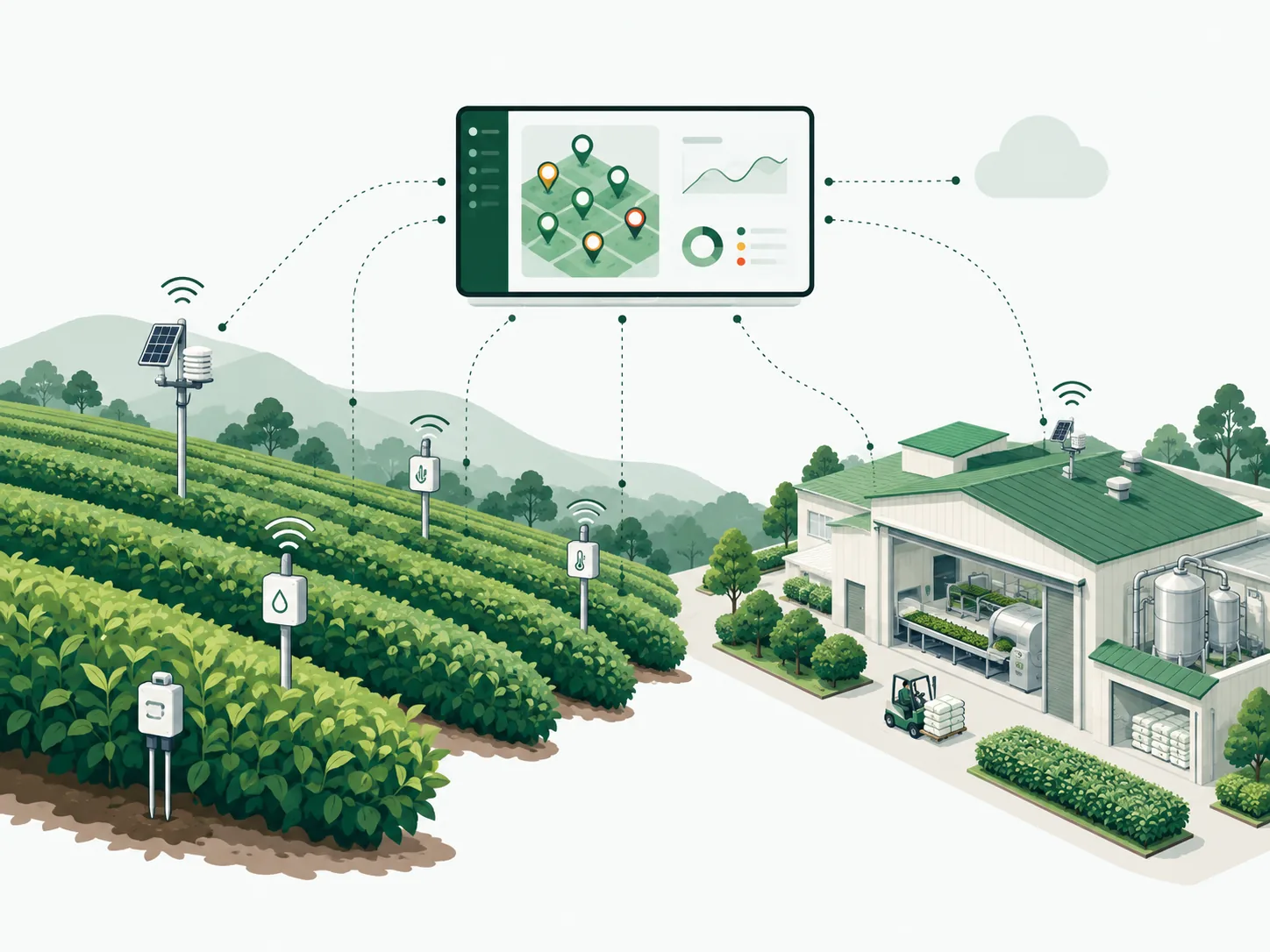
Illustration of sensors in a tea estate and factory sending information to a monitoring interface.

Concept illustration; equipment and sensor support depend on the deployment.
Know where a reading comes from and when to act.

A pressure, temperature or humidity reading needs a location and process context. TEAlink IoT is designed to help teams see where it was measured, check it against the expected range and identify who needs to know about a deviation.

These records support notifications and help teams learn from observations over time.

From growing conditions to manufacturing environments.

Irrigation water pressure and soil-related measurements can help teams understand what is happening in specific areas of an estate. Where configured, unusual readings can raise a timely alert for investigation.

Temperature and relative humidity can be monitored at relevant production stages. Defined operating ranges and notifications help operators identify conditions that require attention.

  • Irrigation pressure
  • Soil measurements
  • Temperature
  • Relative humidity
  • Additional sensors and integrations as required.

From a sensor reading to the right response.

Measure

A connected sensor captures a relevant physical parameter.

Put it in context

The reading is recorded against the relevant location, process or equipment.

Check the range

A configured rule identifies readings that require attention.

Notify

A designated person receives an alert through a supported channel.

Investigate

The team checks the condition and decides how to respond.

Alerting depends on the sensors, connectivity, thresholds and notification channels configured for the deployment.

An alert when irrigation pressure drops.

For example, a pressure sensor on an estate irrigation line reports a reading outside the normal range. A configured alert can notify the responsible person, who can investigate the cause and decide what to do. Records collected over time can also help the estate study how operating conditions relate to production patterns.

Illustrative scenario; implementation depends on site conditions and configured equipment.

TEAlink IoT — from sensor to timely alert Irrigation sensor, low-pressure rule evaluation, and notification delivered to a supervisor. This is an illustrative example; no measurements represent live customer data. The three stages are arranged left to right. TEAlink IoT — from sensor to timely alert Irrigation sensor, low-pressure rule evaluation, and notification delivered to a supervisor. This is an illustrative example; no measurements represent live customer data. The three stages are arranged top to bottom.
  1. Monitor irrigation pressure

    Connected sensors track field conditions.

  2. Detect a deviation

    Defined limits identify unusual readings.

  3. Notify the right person

    The supervisor receives an alert so the team can investigate.

Illustrative irrigation-pressure scenario, not live readings. Alerts depend on configured sensors, connectivity, operating ranges and notification channels.

Keep a closer watch on manufacturing conditions.

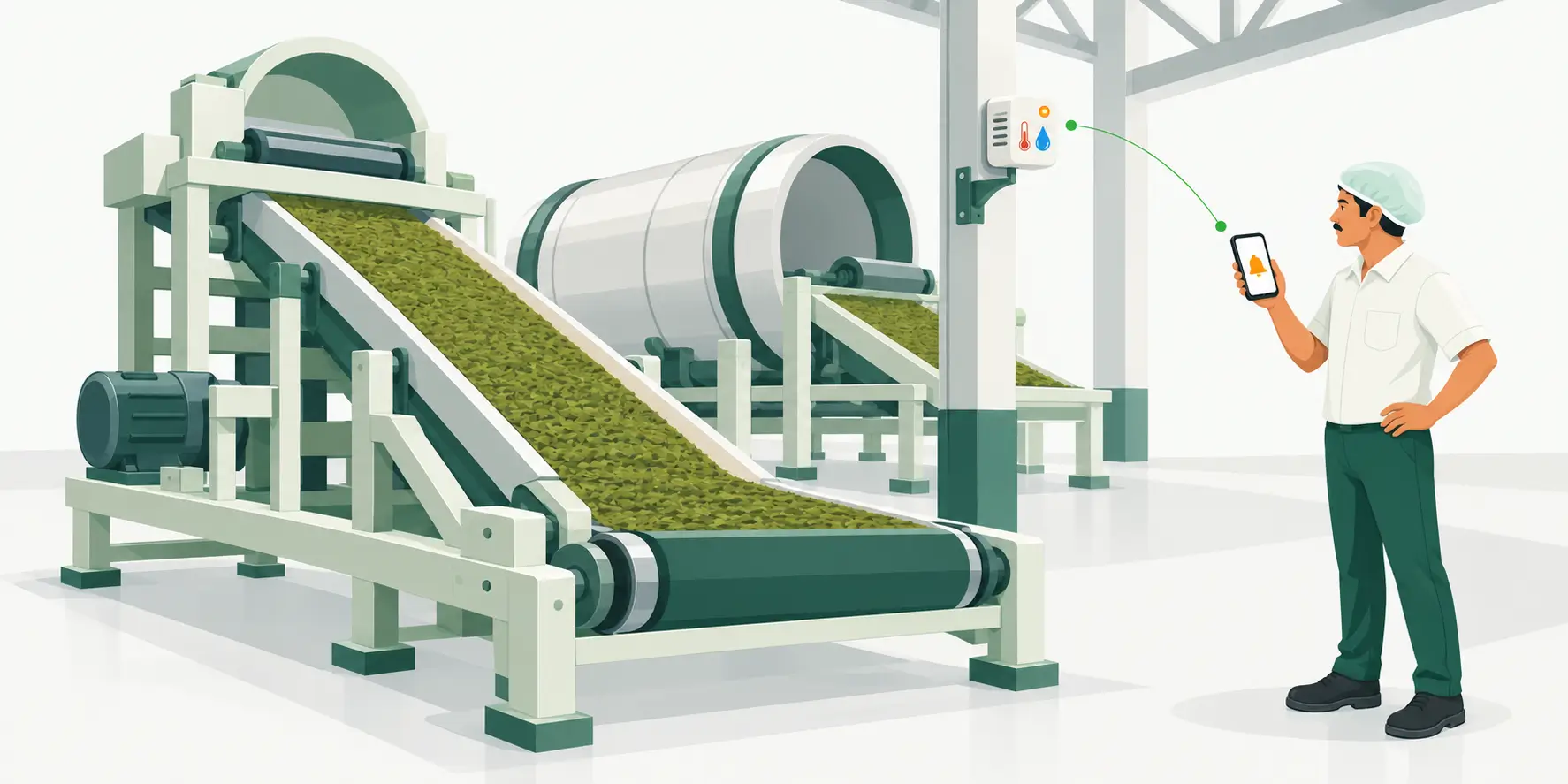
Record temperature and relative humidity against the relevant tea-manufacturing stage. If a reading moves outside a defined range, an alert can prompt the responsible operator to investigate while the information is still relevant.

Illustrative scenario; operating ranges must be established for each factory/process.

Illustration of tea-processing equipment, a temperature and humidity sensor, and an operator receiving a phone alert.

Illustrative monitoring scenario; equipment, operating ranges and alerts depend on the deployment.

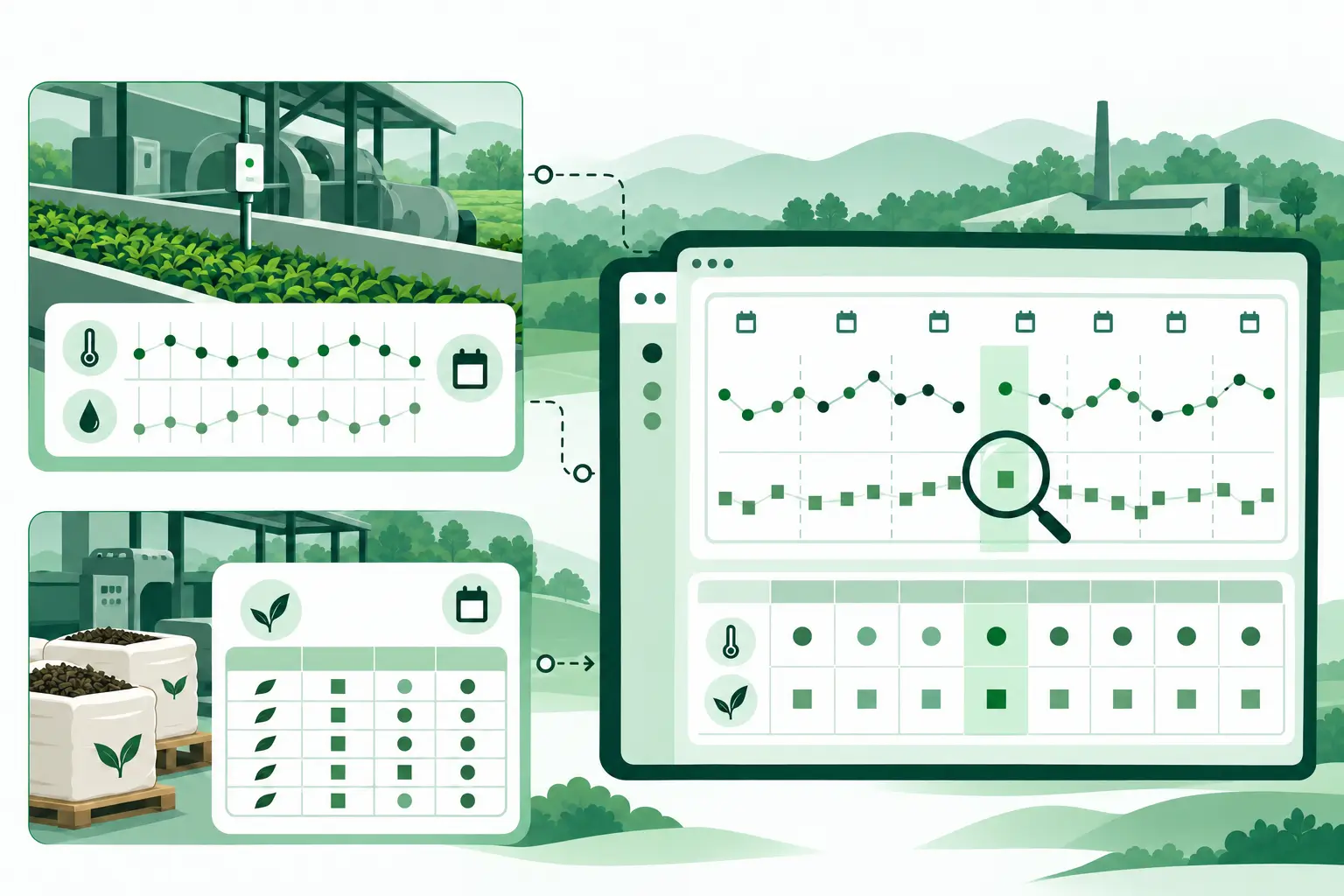
Study conditions alongside production and quality records.

We aim to help tea producers study environmental and operational measurements alongside production outcomes. Estate teams could examine how recorded conditions relate to green leaf production and quality. Factory teams could compare process conditions with manufacturing outcomes and assessments of made tea.

This work requires consistent observations, relevant production and quality records, and careful analysis. TEAlink IoT helps teams collect operational measurements for that work. Any relationship with quality needs validation from the records; a sensor reading alone cannot establish it.

Illustration bringing sensor observations and production or quality records together for comparison over time.

Illustrative analysis concept; relationships with quality require validation from relevant records.

Start with the measurements that matter to you.

TEAlink IoT can address a particular monitoring requirement using the sensors, thresholds and notifications your site needs. Additional sensor types and applications can be added over time as requirements develop.

What would you like to monitor, understand or improve?

Tell us about a condition, equipment issue or quality-related question in your estate or factory. We can discuss a practical deployment and the information you want to learn from it.